Every job below is one we do ourselves across Tustin.
We frame new decks from the footings up, sizing posts and beams to the actual load the deck will carry, not just what looks right. Ledger boards get bolted and flashed properly where they meet the house, since that's the joint most decks eventually fail at. We'll walk you through wood or composite decking before we pour a single footing.
A deck that feels bouncy usually means a joist has cracked or a beam is undersized, and we open it up to find out rather than guessing from the top. Loose railings, split stair stringers and rotted ledger boards all get fixed the same way, by replacing the actual failed member instead of patching over it. Some repairs take an afternoon, others mean rebuilding the frame under boards that still look fine.
Southern California sun bleaches and dries out wood faster than most people expect, and an unsealed deck can start splitting within a couple of years. We pressure wash, let the boards dry fully, then apply a penetrating stain or sealer rated for UV, not a surface coating that peels. Composite decking skips the staining, but we'll still clean and treat the fasteners and end caps.
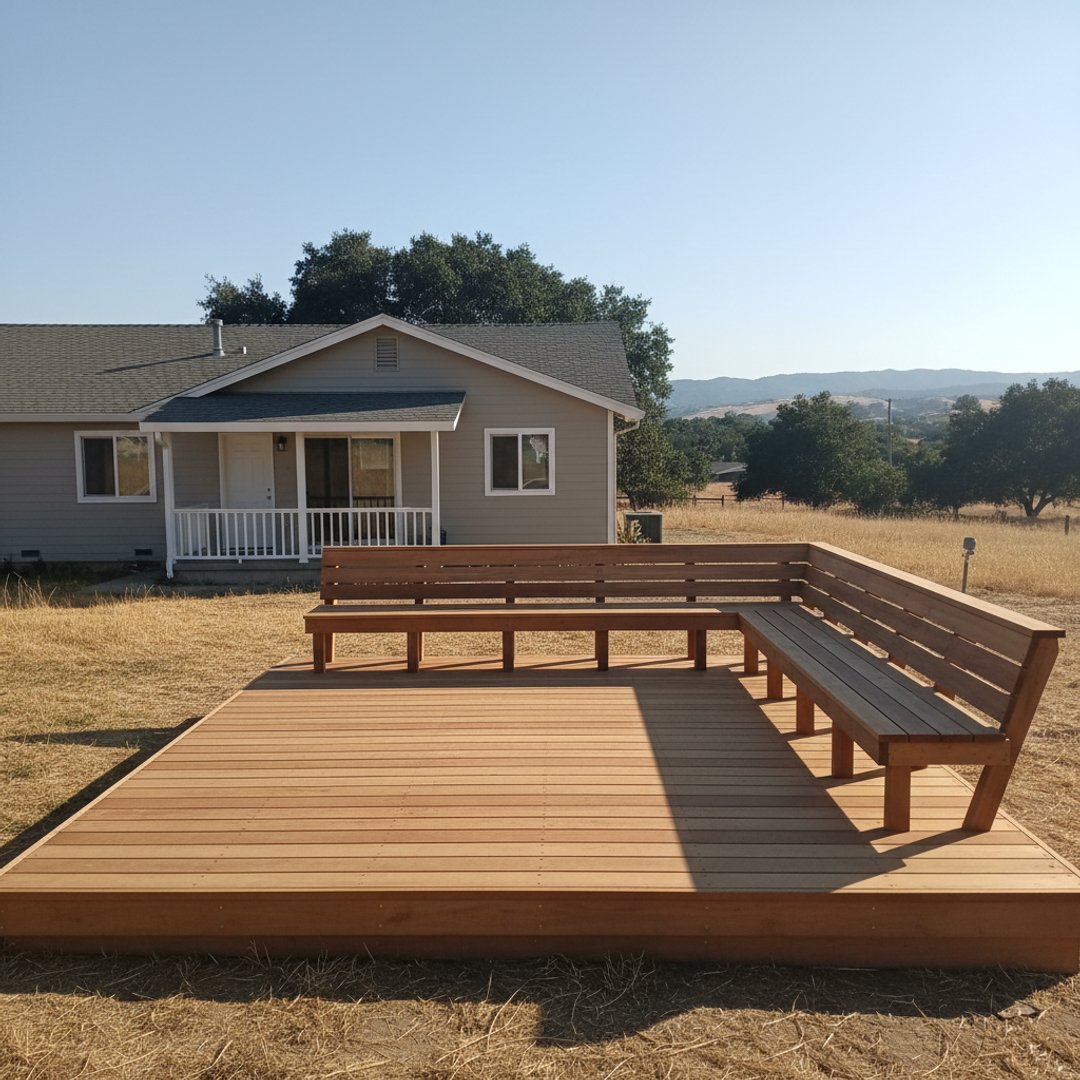
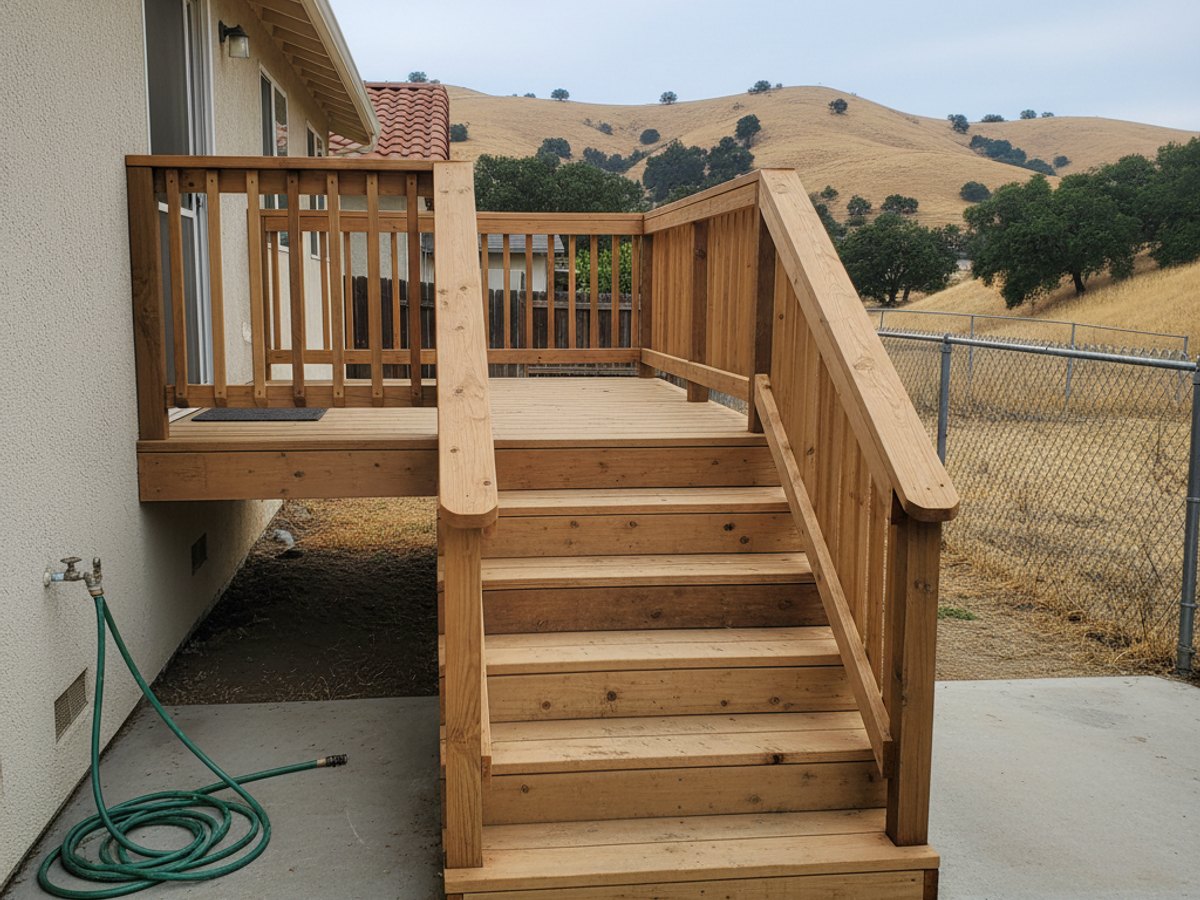
Some yards need a single flat platform, others need steps down to a lower patio or a bench built into the railing. We design around the slope of your yard, where the sun sits in the afternoon, and how many people you actually want standing out there at once. Anything over 30 inches off the ground gets a guardrail worked into the design from the start, not bolted on after the fact.
Composite boards like Trex or TimberTech don't rot or splinter, and they skip the yearly staining that wood decking calls for. We still frame the substructure in real lumber and use hidden fastener clips so the surface stays free of screw heads. Composite expands and contracts more than people think, so board spacing gets set for our summer heat, not a cool morning install.
A railing that wiggles is usually a post that's only screwed to the rim joist instead of bolted through with blocking behind it. We rebuild posts properly and set baluster spacing so a 4 inch sphere can't pass through, which is what most cities check on inspection. Cable rail, wood, and aluminum systems are all fair game.
If the frame underneath is still solid but the boards are cupped, gray, or full of splinters, we can strip the old decking and lay new boards over the existing structure. This costs less than a full rebuild and takes a fraction of the time, usually a day or two depending on square footage. We check every joist for soft spots before any new board goes down.
Sometimes it's just a handful of boards that took the worst of the sun or caught standing water, not the whole deck. We pull the damaged boards, check the joist underneath for rot, and match new decking as close as we can to the existing color and profile. It's the cheapest fix that holds up, when the rest of the deck is sound.
Old decks come down board by board so we can check the ledger and framing underneath for rot before anything new goes up. We haul away every scrap of old lumber, nails and all, so you're not left staring at a pile of debris. This is usually the first step before a rebuild, but we'll do standalone removals too.
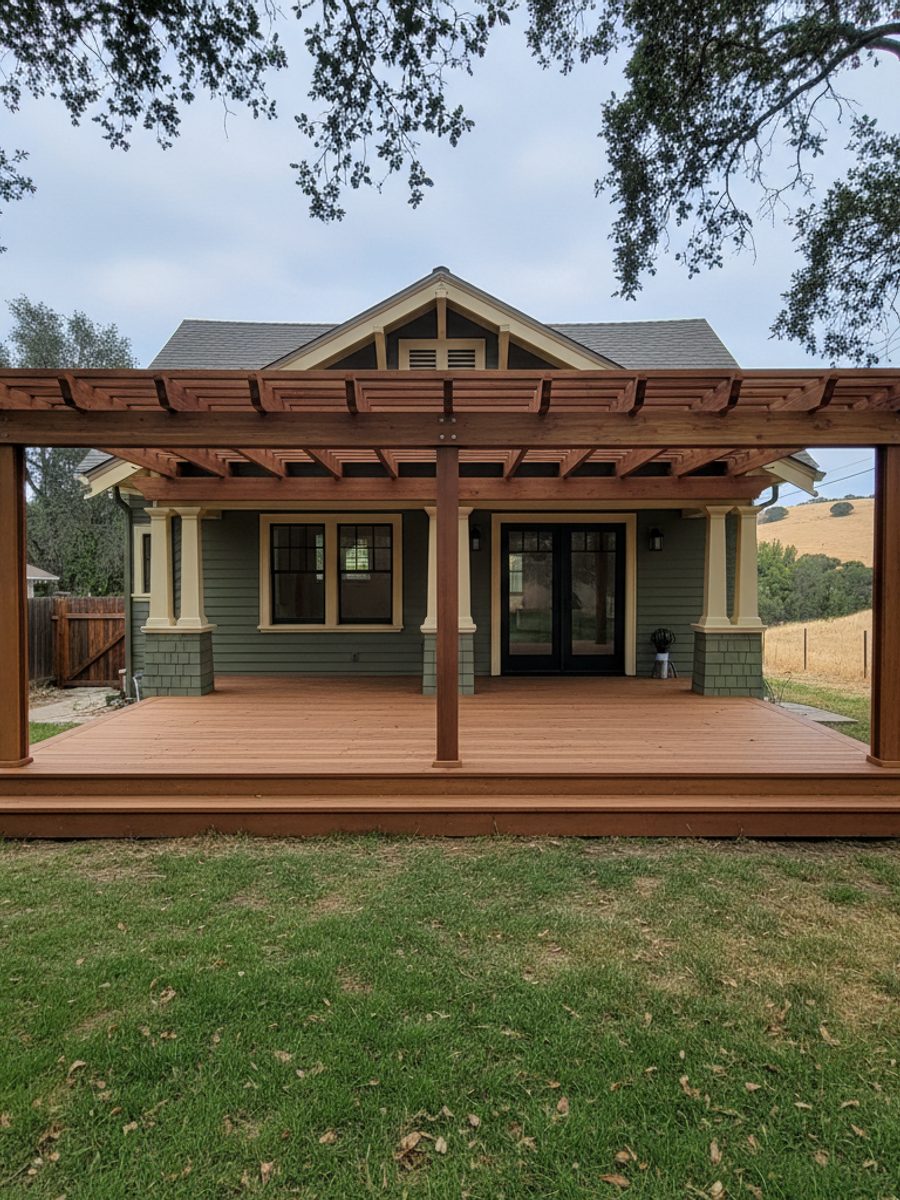
A lot of decks in this area need shade more than anything else, so we build pergolas and attached covers alongside the decking itself. We tie the posts into the same footing work as the deck so the structure moves as one, not two things fighting each other in an earthquake. Shade cloth, louvered covers, or open rafters, depending on how much sun you actually want blocked.
Four steps, and no surprises in any of them.
You tell us what you want doing, we look at what is actually there, and we ask the awkward questions early.
In writing, itemised, free. If something might add cost later we flag it now rather than at the end.
Same crew throughout. We cover your floors, keep the dust down and tidy up before we leave each day.
You point out anything you are not happy with and we fix it before the invoice, not after.
Deck installation and repair, available across these Orange County communities.
Questions that come up once a deck project is underway.
Describe the problem and we will tell you what it probably is. No obligation.