A deck is one of the few home projects where a bad hire doesn't just cost you money, it can cost you a limb. A deck that pulls away from the house because the ledger board was face-nailed instead of through-bolted and flashed is not a rare story. It happens often enough that the International Residential Code rewrote its deck ledger requirements specifically because of collapses. So before you get to color of composite or the shape of the railing, you need to know how to sort a builder who does this correctly from one who is guessing.
Check the license, and check what it actually covers
In California, look the contractor up on the CSLB website before you sign anything. You want an active license, a bond, and general liability insurance, and if they've got employees on the ladder, workers' comp too. Ask for the certificate of insurance directly, not just a verbal "yeah we're covered." A contractor who hesitates to send that over by email in the next ten minutes is telling you something.
Don't be shy about asking how long they've been building decks specifically, versus doing general remodeling. Framing a deck that will hold up a hot tub or a crowd of people at a barbecue is a different job than hanging cabinets.
Ask about the ledger board before you ask about anything else
This is the single connection that holds most attached decks to the house, and it's the point that fails most often. A properly attached ledger is lag-bolted or through-bolted into the house's rim joist, not nailed, and it has flashing installed above it so water sheds away from the house framing instead of soaking into it for ten years unnoticed. Ask your builder directly: how are you attaching the ledger, and what flashing are you using? If the answer is vague, or if they say nails are fine, that's a walk-away moment, not a negotiating point.
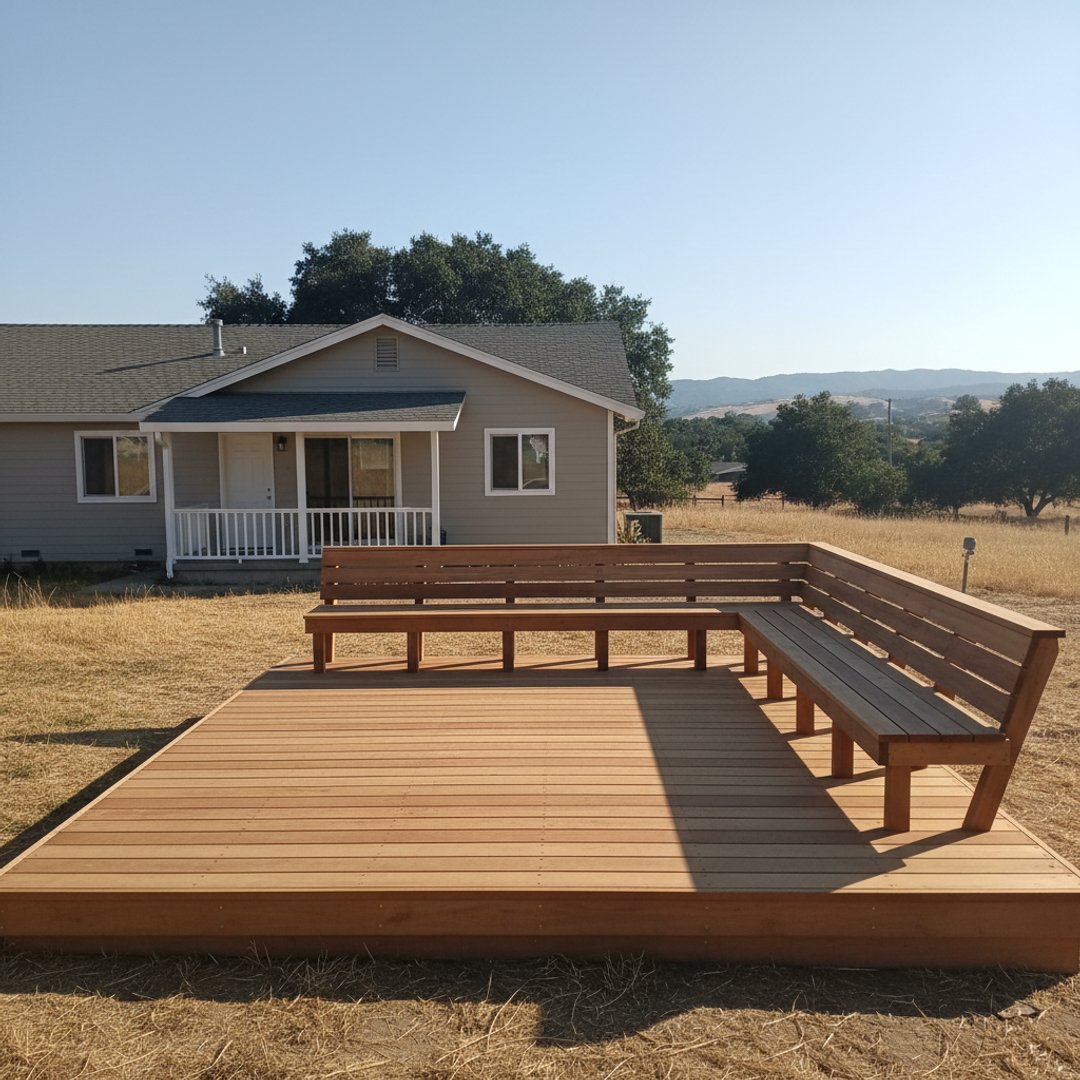
Free-standing decks, the kind with their own posts and footings on all four sides instead of attaching to the house, sidestep this problem entirely. It's worth asking whether that's an option for your layout, especially on a stucco house where flashing has to be cut into the wall correctly or you're inviting water behind the siding.
What Tustin's ground does to footings
Orange County doesn't give you frost heave, so footings here aren't chasing a frost line the way they would in Denver or Chicago. What they are chasing is the clay. A lot of the soil around Tustin, especially in the older grid streets near Old Town and out toward the Santa Ana riverbed, has enough clay content to expand when it's wet and shrink hard when it dries out in July and August. A footing that's undersized or poured too shallow can shift a few seasons in, and you'll feel it as a deck that's slightly out of level or a post that's started to lean.
A builder who knows the area will typically go with footings in the 12 to 18 inch depth range at minimum, more for larger structures or anything supporting a pergola or roof load, and will size the footing diameter to the soil rather than using one number for every job. If your lot has had drainage problems or standing water after a winter storm, that's worth mentioning up front, because it changes how the footings get engineered.
Permits, HOAs, and what actually gets inspected
Most decks in Tustin over about 30 inches off grade need a building permit through the city, and that usually means an inspector checks the footings before they're covered with concrete, checks the framing before the boards go down, and does a final walk-through when railings and stairs are in. A contractor who tells you "we don't bother with permits for decks" is either cutting corners or hasn't done one that got inspected, and either way you're the one holding the risk when you go to sell the house and the buyer's inspector asks for permit records that don't exist.
If you're in one of the newer planned communities, Tustin Ranch, Columbus Grove, or the newer construction around Tustin Legacy, there's a good chance you've also got an HOA architectural review to clear before the city permit even gets pulled. That review can add a few weeks, so ask your builder if they've dealt with your specific HOA before and whether they'll handle that submission or leave it to you.
Older streets, particularly around Old Town Tustin where houses go back to the 1910s through the 1950s, sometimes have surprises underground once digging starts, old irrigation lines, buried debris, foundations from structures that no longer exist. A builder who's worked those blocks before won't be caught off guard by it.
Materials, the sun, and what a bid should actually say
Tustin gets long stretches of dry heat from June through September with strong UV, and the Santa Ana winds in fall can dry out lumber fast and kick up enough dust to matter if you're staining. Wood decking here needs sealing on a real schedule, generally every one to two years depending on sun exposure, or it checks and greys out early. Composite doesn't need that maintenance, but it does get hot to bare feet in a way pressure-treated pine doesn't, worth knowing if you've got young kids running around out there in August.
A bid worth taking seriously spells out the species or brand of decking, the size of the framing lumber, the fastener type, whether the ledger is being through-bolted or lagged, and what the payment schedule looks like. A deposit of 10 percent or so up front is normal. A demand for half the job cost before a single footing is dug is a red flag, and so is a bid with no mention of a permit at all.
Get at least two bids and put the same questions to both. The gap between them tells you more than either number alone.
We've built our own approach to all of this around the conditions here specifically, the clay, the sun, the mix of older and newer streets in this part of Orange County. You can see the range of work we do at Classic Deck Co.